


Please Leave Us A Message
Privacy statement: Your privacy is very important to Us. Our company promises not to disclose your personal information to any external company with out your explicit permission.
 Zhejiang Dongri Valve Co., Ltd.
LNG boils at -162°C, but a competent tender specifies the Valve's design temperature 10 to 34°C colder — because flash, cold spots and start-up transients run below the line temperature, and the valve must survive the worst case, not the average one. Most award disputes in cryogenic packages trace back to the same ambiguity: bidders priced to the operating number while the MTR and cold tests followed a different standard. This breakdown of design temperature versus operating temperature margin in LNG valve tender conditions gives EPC reviewers the audit rules that close the gap. Zhejiang Dongri Valve Co., Ltd. quotes every cryogenic Ball Valve to the design number, tested, not claimed.
Because -162°C is a line temperature under steady atmospheric storage, and tender design conditions must cover the excursions that push the metal colder. Three named mechanisms explain the margin most specs simply state as "Operating -162°C / Design -170°C":
The consequence for the ball valve package is that the impact-test floor, not the datasheet headline, is the compliance line. Under ASME B16.34 practice and MSS SP-134, Charpy V-notch energy (roughly 27 J / 20 ft·lb) must be demonstrated at or below the minimum design metal temperature. So the LNG tender design temperature -170°C specification trap is arithmetic: a 3.5% nickel LF3 / A350 LF3 Forged Steel Ball Valve was impact-tested to -101°C, sits 69°C above the spec floor, and can lawfully arrive in a shipment that "looks LNG-compatible" on the quotation sheet.
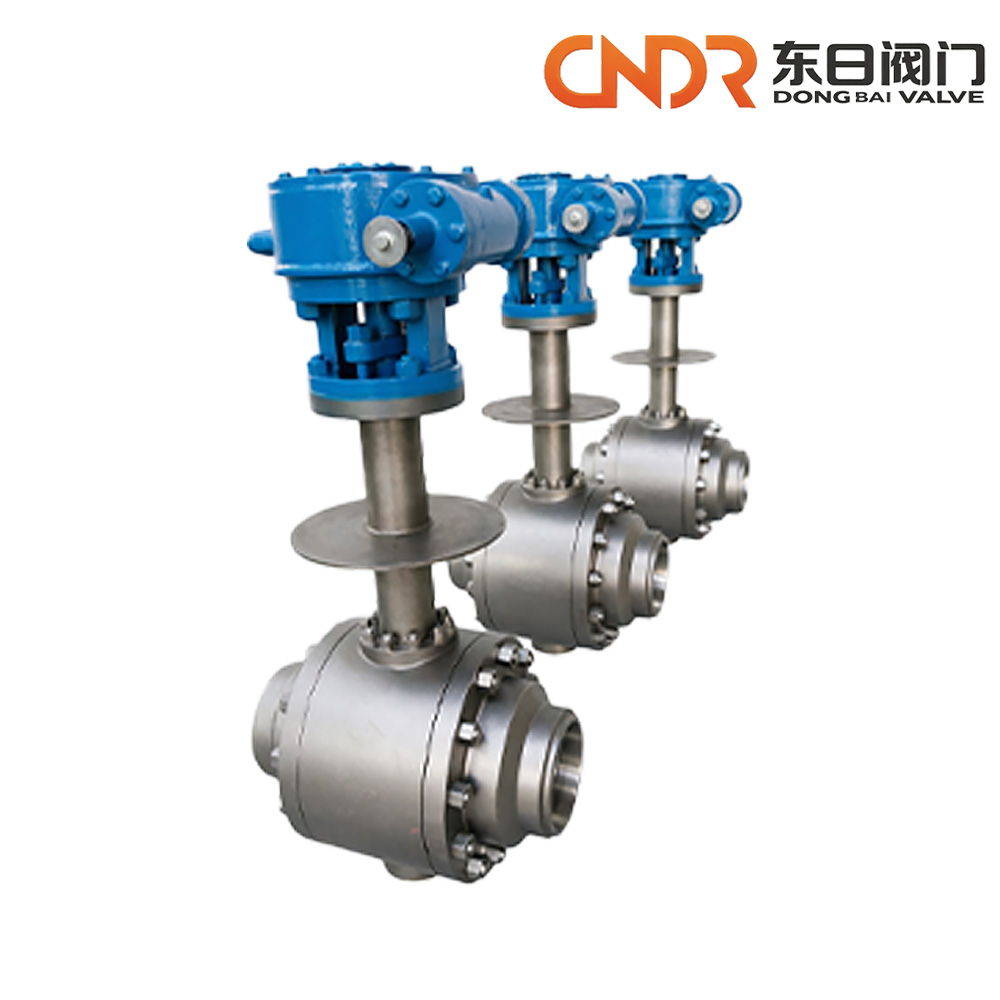
The same trap re-rates seat and bonnet choices. A PCTFE-seated Floating Ball Valve qualified at -170°C service is standard; the soft-seat family itself is safe. Where bidders cut cost, they cut testing: the why design margin matters in cryogenic valve procurement argument lands on the MTR file, because the buyer who specified -170°C but accepts -101°C-tested steel bought a document, not a margin. Large-bore mainline positions have it worse — a Trunnion Mounted Ball Valve quoted on operating temperature skips the spring-assisted seat preload needed to hold seal through the -170°C shrinkage transient.
✅ Bottom line: The tender's colder number is the real specification; every material test, seat qualification and cold cycle must trace to it, never to the prettier operating line.
Compare three documents per bidder — MTR impact-test temperature, cryogenic test report temperature, and datasheet design rating — and the -170°C trap is usually visible in under ten minutes. A clean API Ball Valve to API 6D proves dimensions, fire test and stem retention; it says nothing about cryogenic toughness, which is why pipeline specs dual-reference ISO 28921-1 / BS 6364 and bidders should be scored against both.
Run this checklist per offer:
For ball valve packages, the practical fix is drafting discipline: state "Design temperature: -170°C; all wetted-part impact testing at or below -170°C; cryogenic functional test per ISO 28921-1 at -196°C" in the RFQ itself. Bidders then cannot hedge between operating and design without disqualifying on their own datasheet, and the design temperature versus operating temperature margin in LNG valve tender stops being a negotiation lever.
Dongri supports EPC and terminal tenders with MTR-temperature traceability sheets published per heat lot, BS 6364 / ISO 28921-1 witnessed test options, and OEM/ODM engineering clarification during bid evaluation — Zhejiang Dongri Valve Co., Ltd., direct from our China factory, with wholesale program pricing for multi-unit air-gas and LNG packages. The why design margin matters in cryogenic valve procurement answer a supplier gives in the bid phase predicts the answers in the punch-list phase.
✅ Bottom line: Award on the test floor written in the MTR, not the temperature printed on the nameplate — one RFQ sentence enforces it.
Q: Can we let the bidder choose between -162°C and -170°C as design temperature? A: No — and the whole LNG tender design temperature -170°C specification trap closes if you don't. The margin is what separates a valve that survives JT flash and shutdown cold spots from one that survives only the steady-state reading. If the process data genuinely never excursions below -162°C, document that decision in the spec basis; silence is what produces the dispute at commissioning.
Q: Does an API 6D ball valve satisfy a cryogenic LNG tender automatically? A: No. An API ball valve built to API 6D covers dimensions, fire-safe behavior and line integrity; cryogenic qualification lives in ISO 28921-1 / BS 6364 and the impact-test record. Dual-spec the tender, or reviewers will compare a pipeline-valve price against a plant-valve temperature and both bidders will claim the win.
Q: How should procurement score the -101°C LF3 versus 9% nickel price gap? A: Score compliance first: the LF3 offer is not cheaper, it is unqualified, and re-procuring one forged steel ball valve after a rejected MTR review costs more in schedule than the 10–30% material delta. A credible Chinese cryogenic ball valve manufacturer like Dongri quotes 9% nickel or F316 builds with the test dossier included at factory-direct levels, which usually undercuts the non-compliant bid's true landed cost.
Send your tender spec or datasheet — Dongri's engineering team returns a compliance read against design temperature versus operating temperature margin in LNG valve tender practice: MTR test floors, bonnet series, cavity-relief provision and cold-torque actuator sizing, with OEM/ODM bid clarification from our China factory.
Email: 241126365@qq.com
Mobile: +86 13777730323
Website:www.zjdrvalve.com
Email to this supplier
Privacy statement: Your privacy is very important to Us. Our company promises not to disclose your personal information to any external company with out your explicit permission.
Fill in more information so that we can get in touch with you faster
Privacy statement: Your privacy is very important to Us. Our company promises not to disclose your personal information to any external company with out your explicit permission.