Cast
Floating Ball Valve Applications, Specifications, and Pressure Rating: A Comprehensive Overview The cast floating
Ball Valve is a critical component in various industrial and commercial systems where precise control of fluid flow is essential. This type of
Valve is specifically designed to handle a wide range of media, including liquids, gases, and even some corrosive substances. Its robust construction and reliable performance make it a preferred choice in applications that require high durability and minimal maintenance. Whether used in oil and gas pipelines, chemical processing plants, or water treatment facilities, the cast floating ball valve offers a dependable solution for managing flow with accuracy and efficiency. Key Features of Cast Floating Ball Valve One of the standout features of the cast floating ball valve is its ability to maintain a tight seal under varying pressure conditions. The design allows the ball to float slightly within the valve body, which helps in achieving a better seal when the valve is closed. This feature is particularly beneficial in applications where leakage prevention is crucial. Additionally, the valve is constructed using high-quality materials such as cast iron, stainless steel, or other durable alloys, ensuring long-term reliability and resistance to wear and tear. Another important characteristic is the pressure rating, which determines the maximum pressure the valve can safely handle. The cast floating ball valve comes in various pressure ratings, making it suitable for different operational environments. These ratings are typically specified according to industry standards such as ASME or API, ensuring compliance with global safety and performance requirements. The valve's specifications also include details about the size, connection type, and operating temperature range, allowing users to select the most appropriate model for their specific needs. Detailed Description of Cast Floating Ball Valve The cast floating ball valve operates by rotating a spherical ball inside the valve body to control the flow of media. When the valve is open, the ball is positioned so that the passage through it aligns with the flow direction, allowing the medium to pass freely. When closed, the ball is rotated 90 degrees, blocking the flow completely. This simple yet effective mechanism ensures quick and easy operation, often requiring only a quarter-turn to switch between open and closed positions.
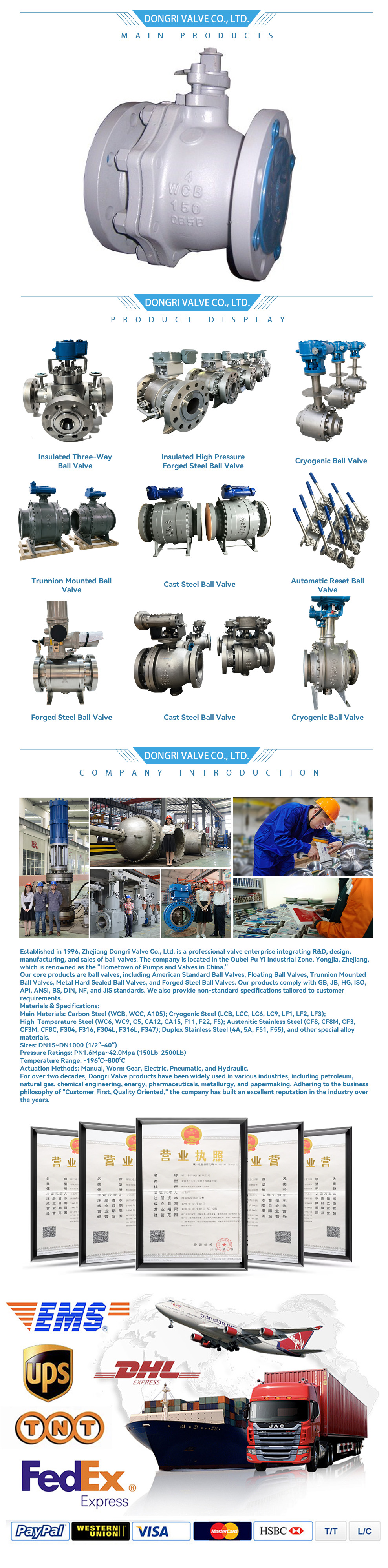


 Zhejiang Dongri Valve Co., Ltd.


 Contact Now